Before discharge
- Ask the hospital team what the person can and can’t do yet: walking aids, limits on movement, and anything to avoid.
- Get the discharge summary and any therapy notes. They help everyone who cares for the person next, including a home physiotherapist.
- Ask about equipment, such as a walking frame, commode or shower chair, and whether it should be in place before the person gets home.
- Plan the first day. Who will be there, and how will the person get from the car or taxi to the flat?
Room by room
The route through the home
- Clear a wide path from the bed to the toilet and the main sitting area.
- Remove or secure loose rugs, and tidy away wires.1
- Move furniture the person might grab for balance if it isn’t stable.
Bedroom
- Check the bed height: feet should rest flat on the floor when sitting on the edge.
- Put a lamp or switch within reach of the bed, and keep the way to the toilet well lit.1
- Keep a phone, water and glasses within reach.
Bathroom
- Consider grab bars and non-skid tape in the shower,1 and grab bars where there are kerbs or steps.3
- A shower chair helps if standing for long is hard.
- For eligible HDB households, the EASE programme subsidises items such as grab bars and slip-resistant treatment for toilet and bathroom floors.2
Kitchen and living area
- Put everyday items between waist and shoulder height so there’s no need for stools or low bending.
- Choose a firm chair with armrests to make standing up easier.
Daily routines that help
- Get up slowly. HealthHub’s stroke guidance suggests sitting up for a few minutes after waking, and doing a few sit-to-stand movements at the bedside before walking away.3
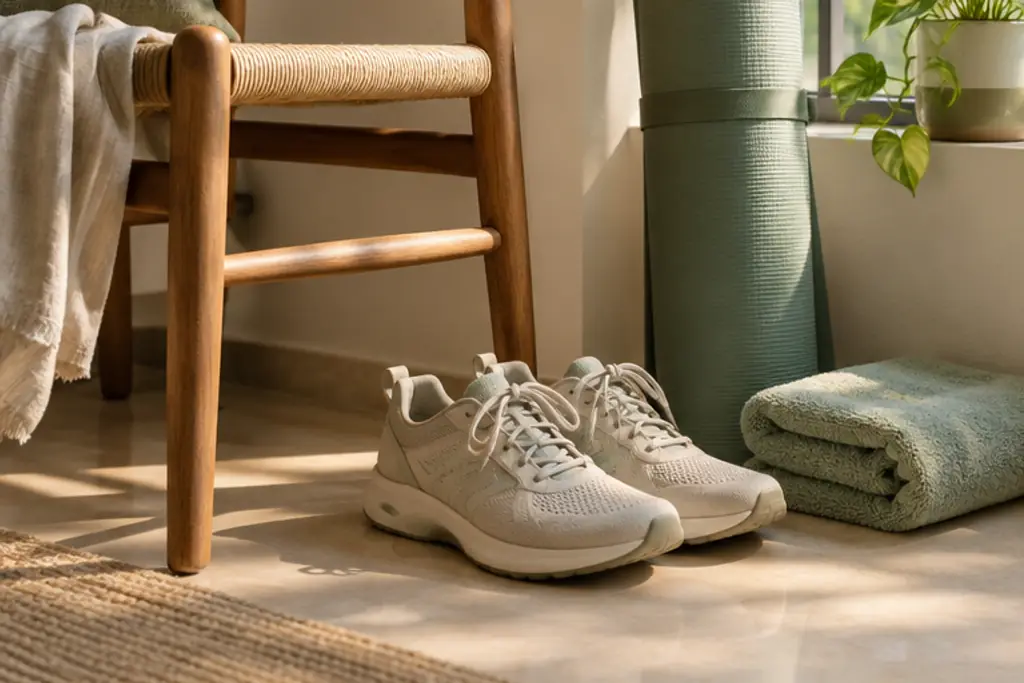
- Wear well-fitting footwear at home: unsuitable footwear is one of the reasons people fall.1
- Keep up the exercises the hospital or physiotherapist gave you, at a regular time each day.3
- Plan rest. Tiredness is common after a stroke or a hospital stay. Build activity up gradually.3
Looking after yourself as a caregiver
Caring for someone after a hospital stay is demanding. Learn safe ways to help them stand and walk, so you don’t hurt your back. Ask for help early: from family, a helper, or services in the community.
When home physiotherapy helps
A physiotherapist visiting at home can:
- check how the person moves around this home, not a clinic
- practise the tricky moments: getting out of bed, the toilet, steps
- suggest simple changes to the home
- show family members and helpers how to support safely.
Oreka arranges registered physiotherapists for home visits in Singapore. S$250 nett for a 60-minute visit starting 8am–7pm. Arrange care for a loved one
When to get medical help
Contact the person’s doctor if something is getting worse instead of better. For sudden weakness, a drooping face, difficulty speaking, chest pain, severe breathlessness or any emergency, call 995.
Sources
Last updated: 1 October 2026